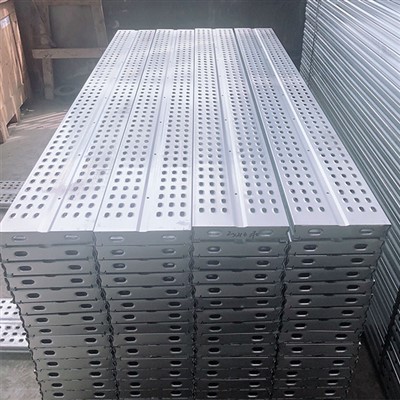
Walkway panels are structures used for passage in constructions, tunnels, platforms, and other scenarios. Their working principles vary depending on type and application.
General Walkway Panels (such as those for tunnels or construction platforms)
Function: Provide a safe and stable platform for personnel and tool passage.
Core Principles
Structural Support: High-strength materials (such as galvanized steel plates or diamond steel mesh) distribute load to prevent collapse.
Traffic Guidance: Direct human and material traffic in complex construction environments to improve operational order.
Slip-Resistant Safety: Surfaces are designed with perforations, raised patterns, or textures to enhance friction and reduce the risk of slipping.
Drainage and Moisture Prevention: Some designs incorporate grids or gaps for natural drainage, keeping the platform dry.
Steel Grating/Grid-Type Walkway Panels (commonly used in industrial plants and outdoor platforms)
Drainage Principle
The open grid structure forms continuous drainage channels, allowing rainwater or cleaning water to quickly flow to the drainage system below, preventing water accumulation.
Faster drainage speed; more efficient than solid panels with the same water volume.
Preventing Debris Accumulation
Small debris (such as leaves or sand) can fall through the grid, reducing manual cleaning.
During heavy rain or washing, water flow can carry away debris in the gaps, providing self-cleaning capability.
Composite Walkway Panels (Prefabricated Assembly Construction Technique)
Process Principle
The bottom layer of walkway panels is prefabricated in the factory and cured to standard before being transported to the site;
Hoisted into position and connected to the in-situ structural reinforcement;
Joints are filled with PE rods, and then concrete is poured to form an integral structure.
Advantages: Reduces on-site wet operations, improves construction efficiency, and enhances controllability of quality.