
When it comes to construction and industrial applications, steel planks are a common choice due to their durability and strength. Two main types of steel planks are widely used: perforated steel planks and solid steel planks. As a perforated steel plank supplier, I am often asked about the differences between these two types of planks. In this blog post, I will delve into the characteristics, advantages, and disadvantages of both perforated and solid steel planks to help you make an informed decision for your project.


Physical Characteristics
Perforated Steel Plank
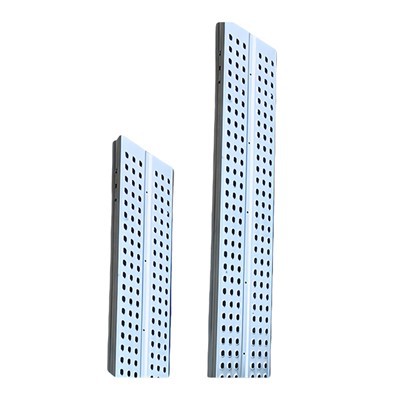
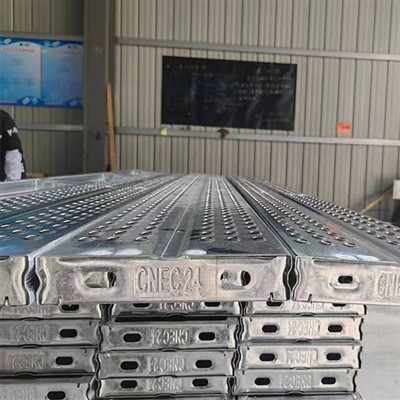
Perforated steel planks are steel sheets that have been punched with holes of various shapes and sizes. These holes can be round, square, rectangular, or slotted. The pattern and density of the holes can vary depending on the specific application. The holes in perforated steel planks serve multiple purposes, including reducing weight, improving drainage, and providing better traction.
One of the key features of perforated steel planks is their lightweight nature. The holes reduce the overall weight of the plank, making it easier to handle and install. This is particularly beneficial in applications where weight is a concern, such as in high - rise construction or when transporting the planks over long distances.
Another important characteristic is the improved drainage. The holes allow water, debris, and other substances to pass through the plank, preventing the accumulation of water on the surface. This is crucial in outdoor applications or in environments where moisture is present, as it helps to prevent corrosion and slipperiness.
The holes also provide better traction. The rough surface created by the holes gives workers better grip when walking on the plank, reducing the risk of slips and falls. This is especially important in construction sites where safety is a top priority.
Solid Steel Plank
Solid steel planks, as the name suggests, are made of solid steel without any holes. They are typically thicker and heavier than perforated steel planks. The solid construction gives them a high level of strength and durability, making them suitable for heavy - duty applications.
Solid steel planks have a smooth surface, which can be an advantage in some applications. For example, in industrial settings where a flat and even surface is required for the movement of equipment or materials, solid steel planks are a good choice.
However, the lack of holes in solid steel planks means that they are more prone to water accumulation. In wet conditions, water can pool on the surface of the plank, creating a slippery surface and increasing the risk of accidents. Additionally, the solid construction makes them heavier, which can make handling and installation more difficult.
Advantages and Disadvantages
Perforated Steel Plank
- Advantages
- Lightweight: As mentioned earlier, the perforations reduce the weight of the plank, making it easier to transport and install. This can lead to cost savings in terms of labor and transportation.
- Drainage: The holes allow for efficient drainage, which helps to prevent corrosion and maintain a safe working surface.
- Traction: The rough surface created by the holes provides better traction, reducing the risk of slips and falls.
- Ventilation: In some applications, the holes can provide ventilation, which is beneficial in areas where air circulation is important.
- Disadvantages
- Lower load - bearing capacity: Compared to solid steel planks, perforated steel planks generally have a lower load - bearing capacity. This means that they may not be suitable for applications where heavy loads need to be supported.
- Susceptible to clogging: The holes can become clogged with debris, which may reduce the effectiveness of drainage and traction.
Solid Steel Plank
- Advantages
- High load - bearing capacity: Solid steel planks can support heavy loads, making them ideal for applications such as industrial flooring or heavy - duty scaffolding.
- Smooth surface: The smooth surface is suitable for applications where a flat and even surface is required, such as for the movement of equipment.
- Disadvantages
- Heavy weight: The solid construction makes the planks heavier, which can make handling and installation more difficult and costly.
- Poor drainage: Without holes, water can accumulate on the surface, leading to corrosion and a slippery surface.
Applications
Perforated Steel Plank
- Scaffolding: Perforated steel planks are commonly used in scaffolding systems. Their lightweight nature makes them easy to install on scaffolding structures, and the drainage and traction features ensure a safe working environment. You can find more information about Steel Plank for Scaffolding.
- Walkways: In industrial facilities, perforated steel planks are used to create walkways. The improved traction and drainage make them a safe choice for workers to walk on. Metal Walk Boards are a popular type of perforated steel planks used for walkways.
- Platforms: Perforated steel planks can be used to build platforms in various industries. The ventilation provided by the holes can be beneficial in platforms where heat or fumes need to be dissipated.
Solid Steel Plank
- Industrial flooring: Solid steel planks are often used as industrial flooring due to their high load - bearing capacity. They can withstand the heavy traffic of equipment and materials in factories and warehouses.
- Heavy - duty scaffolding: In applications where extremely heavy loads need to be supported, solid steel planks are the preferred choice. Plank Metal is a type of solid steel plank that is commonly used in heavy - duty scaffolding.
Cost Considerations
The cost of perforated and solid steel planks can vary depending on several factors, including the size, thickness, and quality of the steel. Generally, perforated steel planks are less expensive than solid steel planks. This is because the perforations reduce the amount of steel used, which in turn reduces the cost.
However, it is important to consider the long - term costs when choosing between the two types of planks. For example, if a project requires a high load - bearing capacity, a solid steel plank may be a better investment in the long run, even though it has a higher upfront cost. On the other hand, if weight and drainage are the main concerns, a perforated steel plank may be more cost - effective.
Conclusion
In conclusion, both perforated and solid steel planks have their own unique characteristics, advantages, and disadvantages. The choice between the two depends on the specific requirements of your project. If you need a lightweight, well - drained, and slip - resistant plank, a perforated steel plank may be the best option. If you require a high - load - bearing capacity and a smooth surface, a solid steel plank may be more suitable.
As a perforated steel plank supplier, I am committed to providing high - quality products that meet the needs of my customers. If you are interested in learning more about our perforated steel planks or have any questions about the differences between perforated and solid steel planks, please feel free to contact me for a detailed discussion and potential procurement.
References
- Construction Materials Handbook: A Guide to Selection, Specifications, and Applications
- Steel Structures Design and Construction Manual