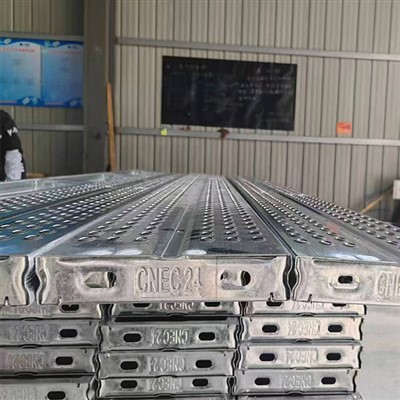

Hey there! As a supplier of Perforated Steel Planks, I often get asked about the sound - insulation performance of these planks. So, I thought I'd dive into this topic and share what I know.
What are Perforated Steel Planks?
First off, let's quickly go over what perforated steel planks are. These are steel planks with a series of holes punched through them. They're super versatile and are used in a bunch of different applications, like in construction for Perforated Metal Planks, Metal Scaffold Boards, and Steel Walk Boards.
How Sound Insulation Works
Before we talk about how perforated steel planks perform in terms of sound insulation, it's important to understand the basics of sound insulation. Sound travels in waves, and when these waves hit a material, they can be reflected, absorbed, or transmitted through it. A good sound - insulating material will absorb or reflect a large portion of the sound waves, reducing the amount that passes through.
Sound - Insulation Performance of Perforated Steel Planks
Now, let's get to the main point. Perforated steel planks aren't typically known for their top - notch sound - insulation properties. Steel, by itself, is a pretty good conductor of sound. When sound waves hit a solid steel surface, they can easily vibrate the steel, which then transmits the sound on the other side.
The perforations in the steel planks add another layer of complexity. On one hand, the holes can disrupt the direct path of sound waves, causing some scattering. This scattering can reduce the intensity of the sound to a certain extent. However, the open holes also allow sound to pass through more easily compared to a solid steel sheet.
In a construction setting, for example, if you're using perforated steel planks as part of a floor or a wall, they might not provide the same level of sound insulation as a dedicated sound - insulating material like fiberglass insulation or acoustic panels.
But it's not all bad news. In some cases, the perforated steel planks can be used in combination with other sound - insulating materials to improve the overall sound - insulation performance. For instance, if you line the back of the perforated steel planks with a layer of acoustic foam, it can absorb a significant amount of the sound that passes through the holes.
Factors Affecting Sound - Insulation Performance
There are several factors that can influence how well perforated steel planks perform in terms of sound insulation.
Hole Size and Pattern
The size and pattern of the holes in the steel planks play a big role. Larger holes generally allow more sound to pass through, while smaller holes can cause more scattering of the sound waves. The pattern of the holes also matters. A random pattern might be more effective at scattering sound compared to a regular pattern.
Thickness of the Steel
The thickness of the steel plank can also impact sound insulation. Thicker steel is generally better at blocking sound because it has more mass. A thicker plank can absorb more of the sound energy and reduce the amount that is transmitted.
Mounting and Installation
How the perforated steel planks are mounted and installed can also affect their sound - insulation performance. If the planks are tightly sealed and properly installed, it can reduce the amount of sound that leaks through the joints. On the other hand, if there are gaps or loose connections, sound can easily pass through.
Real - World Applications
In real - world applications, the sound - insulation performance of perforated steel planks can vary. In industrial settings, where noise levels are already high, the primary function of the planks might be more about structural support rather than sound insulation. However, in some commercial or residential buildings, where noise control is important, additional measures need to be taken to improve the sound - insulation of the perforated steel planks.
For example, in a commercial building where the perforated steel planks are used as part of a mezzanine floor, the planks can be combined with a suspended ceiling system that has acoustic properties. This combination can help reduce the amount of noise that travels between different levels of the building.
Improving Sound - Insulation of Perforated Steel Planks
If you're looking to improve the sound - insulation performance of perforated steel planks, there are a few things you can do.
Adding Acoustic Liners
As mentioned earlier, adding an acoustic liner to the back of the planks can significantly improve sound insulation. Acoustic liners, such as fiberglass or mineral wool, can absorb a large amount of sound energy.
Using Sealing Materials
Sealing the edges and joints of the planks with a high - quality sealant can prevent sound from leaking through. This is especially important in areas where the planks are connected to other structures.
Designing the Planks Wisely
When designing the perforated steel planks, you can optimize the hole size and pattern to improve sound - insulation. For example, using a combination of different hole sizes and a non - regular pattern can help scatter sound more effectively.
Conclusion
So, to sum it up, the sound - insulation performance of perforated steel planks is not their strong suit, but with the right design and additional measures, it can be improved. If you're in the market for perforated steel planks and sound insulation is a concern, don't worry. We can work together to find the best solution for your needs. Whether it's choosing the right hole pattern, adding acoustic liners, or using proper sealing materials, we've got you covered.
If you're interested in learning more about our Perforated Steel Planks or have any questions regarding their sound - insulation performance, feel free to reach out. We're always happy to have a chat and discuss how our products can meet your requirements.


References
- "Building Acoustics: Principles and Practice" by Bill Davies
- "Sound and Vibration Handbook" by Cyril M. Harris