
Determining the strength of perforated metal planks is a critical aspect for both suppliers and users, as it directly impacts the safety and performance of the products in various applications. As a supplier of Perforated Metal Planks, I understand the importance of providing high - strength products that meet the diverse needs of our customers. In this blog, I will share some key factors and methods to determine the strength of perforated metal planks.
Material Properties
The first and most fundamental factor in determining the strength of perforated metal planks is the material from which they are made. Different metals have different inherent strength characteristics. For example, steel is a commonly used material for perforated metal planks due to its high strength and durability. High - strength steel alloys can provide even greater strength, making them suitable for heavy - duty applications.
The composition of the metal also plays a significant role. Alloying elements such as chromium, nickel, and molybdenum can enhance the strength, hardness, and corrosion resistance of the metal. When selecting the material for our perforated metal planks, we carefully consider the specific requirements of the application and choose the most appropriate metal alloy.
Perforation Pattern and Size
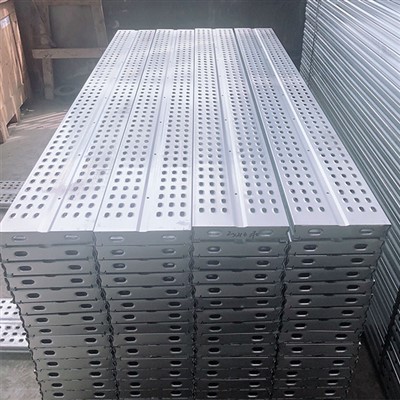
The perforation pattern and size on the metal planks have a direct impact on their strength. A well - designed perforation pattern can distribute the load evenly across the plank, reducing stress concentrations and increasing the overall strength. For instance, a regular grid - like perforation pattern can provide better load - bearing capacity compared to a random or irregular pattern.
The size of the perforations also matters. Larger perforations may reduce the overall cross - sectional area of the metal, which can potentially weaken the plank. However, if the perforation size is optimized, it can also improve the plank's strength - to - weight ratio. We use advanced computer - aided design (CAD) software to simulate different perforation patterns and sizes and determine the optimal design for maximum strength.
Thickness of the Metal Plank
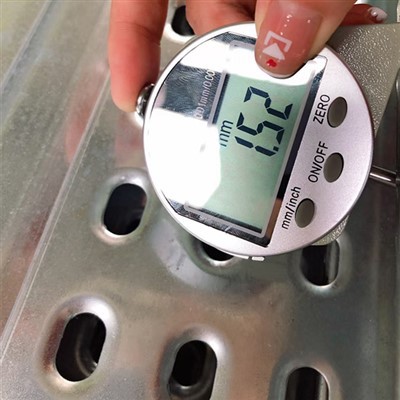
The thickness of the metal plank is another crucial factor in determining its strength. Generally, a thicker metal plank will have greater strength and load - bearing capacity. However, increasing the thickness also increases the weight and cost of the product. Therefore, it is important to find a balance between strength and cost.
We offer a range of thickness options for our perforated metal planks to meet different customer requirements. For light - duty applications, a thinner plank may be sufficient, while heavy - duty applications may require a thicker plank. Our technical team can provide professional advice on the appropriate thickness based on the specific application.
Testing and Certification
To ensure the strength and quality of our perforated metal planks, we conduct a series of rigorous tests. These tests include tensile testing, bending testing, and impact testing. Tensile testing measures the maximum amount of tensile stress the plank can withstand before breaking. Bending testing evaluates the plank's ability to resist bending forces, which is important for applications where the plank is subjected to bending loads. Impact testing assesses the plank's resistance to sudden impacts.
We also obtain relevant certifications for our products, such as ISO 9001 for quality management systems and CE certification for compliance with European safety standards. These certifications provide customers with confidence in the strength and quality of our perforated metal planks.
Application - Specific Considerations
The strength requirements of perforated metal planks can vary depending on the application. For example, in construction, Plank Metal is often used as scaffolding planks, where they need to support the weight of workers and construction materials. In this case, high - strength planks are required to ensure safety.
In industrial flooring applications, Metal Scaffold Boards need to withstand heavy machinery and traffic. The strength of the planks should be sufficient to prevent deformation and damage under these conditions.
For decking applications, Steel Deck Planks need to provide a stable and safe surface for walking and other activities. The strength of the planks should be able to support the weight of people and any additional loads.


Conclusion
Determining the strength of perforated metal planks involves considering multiple factors, including material properties, perforation pattern and size, thickness, and application - specific requirements. As a supplier, we are committed to providing high - quality perforated metal planks that meet the highest strength standards.
If you are in need of perforated metal planks for your project, we invite you to contact us for more information. Our experienced team can help you select the most suitable planks based on your specific requirements and provide professional advice on installation and maintenance. We look forward to the opportunity to work with you and contribute to the success of your project.
References
- "Metals Handbook: Properties and Selection: Irons, Steels, and High - Performance Alloys", ASM International.
- "Structural Steel Design", Jack C. McCormac.